
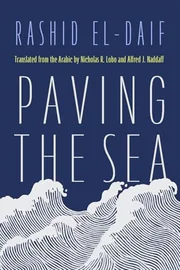

Fares Hashem’s story begins before his birth, with his father, Mansour, whose friendship with the educated Iskandar Haleem introduces him to science, geography, Western medicine, and the possibilities of education. After witnessing the effectiveness of modern medicine firsthand, Mansour becomes determined that his son will receive a proper education, something Mansour himself never had. Fares eventually studies medicine in Beirut before traveling to Europe and the United States, where he encounters both the possibilities of modernity and the prejudice faced by immigrants. He remains committed to returning home and contributing to his country’s renaissance. Fares’ story is written to intentionally parallel that of real historical figure Jurji Zaidan, who appears here as Fares’ friend and fictional double—they even share a birthday (“[t]he two boys grew up as close friends”). El-Daif’s novel combines historical fiction, biography, travel narrative, satire, and intellectual history, moving between Fares’ life and extended digressions about the Arab Nahda (enlightenment), Western missionaries and religion, science, colonialism, and modernization. The novel’s humor is often sharply irreverent, particularly when Fares’ faith in reason and progress runs up against superstition, bureaucracy, discrimination, and human folly. The book’s title derives from a Levantine expression for attempting the impossible—the sentiment captures the novel’s larger theme of humanity’s efforts to impose coherence on a complicated and unstable world. The narrative’s ambitious scope is compelling as the author weaves together such disparate elements as religious burial customs, Darwinian theory and the complexities of emotions regarding one’s family, past, and hopes for the future. The novel’s structure can be frustrating—El-Daif frequently abandons Fares’ story for historical anecdotes, philosophical observations, or episodes involving secondary and historical figures. These digressions illuminate the novel’s ideas and gradually reveal a skepticism about the promises of modernity, but they can also obscure the central narrative and make it difficult to maintain a clear sense of chronology or character; readers seeking a conventional historical novel may struggle with the shifting perspectives and episodic construction.