
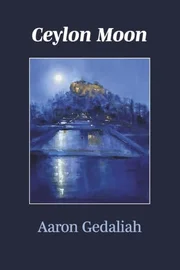

In this collection, Gedaliah confidently conjures the past, contemplates the future, and connects with the natural world. The first section, “Moods and Musings,” centers on “the heart of memory” and opens with “I Am Becoming,” written from the perspective of a child recently freed from a stroller: “I am locomotion. / I am wind. / I am joy unbounded.” Romantic relationships emerge in multiple poems. “Why Did You Text Me?” describes the digital push-pull of a relationship interspersed with recollections of different love interests. “The Voice” describes the moment someone decides “It’s over” and subsequently feels reborn. “Suppression” explores the delusion that “grief / is simply a one-and-done affair.” The “What the Night Brings” section brings themes of sleep and dreams. In light of that theme, “A Song of the Moon” gives voice to the moon, who declares, “Everything I touch becomes enchanted!” The speaker delights in sleeping and dreaming, then drinking coffee and composing poetry in “Kafka Café.” The “With [in] Sanity” section features one poem each dedicated to insanity, sanity, and the state in between. Nature takes center stage in “The Voices” section, where the poet adopts the perspectives of various natural elements, including clouds, mountains, and the sea, in their own respective poems. Aging comes to the fore in a later section: “Rigor Mortis” describes physical decline, including the evocative “Slowing ambulation with unearned pain.” The speaker grapples with impermanence in “Because My Time Is Limited.” The book concludes with “What Is Life?” a poem that consists of questions on the meaning of life, love, and the world.
In these deeply contemplative poems, Gedaliah both appreciates and grieves memorable moments across a person’s lifespan. The poet vividly sets the naturalistic scene in poems like “Mekong Morning,” which captures how the “intense blue sky and water turns / powder blue, shades of pink and red rise / behind the mountains.” Evocative imagery is on display in poems like “Sketch of a Troubled Woman,” which describes a woman “Steady and methodical as / a funeral march. / The heaviness in her chest / impedes each breath. / Her legs leaden by what / she’s obliged to tow.” Bracingly visceral descriptions help the reader experience the tenderness of a “mother’s fingers drifting / across your brow, longing to nestle softly / in her warm lap.” Aging emerges as one of the book’s strongest themes. “Marooned” touchingly captures how its older subject feels unreal without human connection, noting that in the digital age, “talking with a human is a prize / at the end of an obstacle course.” Poems like “Kempt and Unkempt” poignantly document the mental and physical shifts that occur with aging: “My jumbled life pulls against me. / And my best days are rare.” The book’s themed sections provide structure to what might otherwise seem like disjointed subjects. However, free verse dominates the collection; more variety of form could have enhanced the reading experience.