
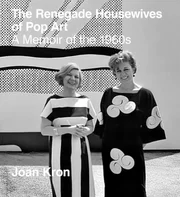

The author was born in 1928 in New York City. Her early memories include going to the circus in Madison Square Garden every year and listening to Orson Welles’ famous War of the Worlds broadcast in 1938; she also recalls harboring fears of falling victim to a Lindbergh baby–like kidnapping. Kron and her family faced some discrimination for being Jewish: “Due to an increasing influx of Eastern Europeans escaping pogroms then, the United States was becoming more and more antisemitic.” The author went on to study costume design at the Yale School of Drama, graduating after three years with a certificate. She later worked at NBC as an assistant designer before marrying a doctor and moving to Philadelphia. The adjustment to a new city wasn’t easy—Kron recalls that she “missed working.” But the move to Philadelphia would result in a major opportunity, and the focus of this memoir: In 1960, the author joined the newly formed Arts Council of the Young Men’s and Young Women’s Hebrew Association. In time, she recruited a friend named Audrey Sabol, “whose artistic work and adventurous taste” made her the perfect person to provide something fresh to the local art scene. These two “housewives” would help to bring the avant garde to Philadelphia, from Pop Art to the Velvet Underground to something called the Beautiful Bag. The author recounts their exploits, sharing scores of photographs from the time. Later portions of the work explore Kron’s life outside of the art world, such as her career in magazine writing.
With elements including newspaper clippings, photos of figures like Andy Warhol, and reproductions of art works (such as Roy Lichtenstein’s Super Sunset Billboard 1967), the memoir offers a plethora of inviting visuals. While the text covers an extensive amount of material, it moves quickly, in a conversational style, as when Kron writes of her and Audrey’s foray into stenciling objects following the success of their Beautiful Bag (a “simple canvas tote with the name of the company stenciled in large letters on the outside”): “[Audrey] found some valises made of white fiberboard—perfect to stencil on. Voila! Lovely Luggage became the next subsidiary.” In the 1960s, the author put together a course in which one could “hear ten lectures by major curators and critics such as Tom Hess and Clement Greenberg at the homes of prominent art collectors such as Henry McIlhenny and Albert M. Greenfield.” Clearly, the Arts Council was not afraid to take big swings, which make for some of the book’s most memorable moments; the author writes of booking the Velvet Underground for a two-night gig at the YMHA in 1966: “It was a gamble and nearly got me impeached by the Y’s board of directors.” The material not devoted to the art world also leaves a lasting impression as the author digs into her personal history and experiences writing for magazines on subjects including the excitement to be found in the New York City neighborhood of SoHo in 1974.