
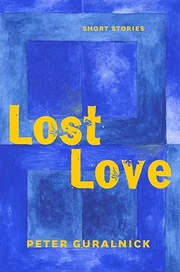

In the opening author’s note, Guralnick quotes novelist Lee Smith: “I have always felt that I can tell the truth better in fiction than nonfiction.” This hints that his 11 stories illuminate emotional truth and depth of feeling more than autobiographical fact. Proceeding from coming-of-age awkwardness through middle-aged angst, they generally present a young white man who reads voraciously though he’s indifferent to school, develops an increasing affinity for music by Black artists before he has ever met any Black people, and is both wildly romantic and totally clueless toward women. The protagonists have different names in each story and attend a variety of colleges, but much remains the same: They’re generally set in Massachusetts in the 1950s and ’60s (Boston, Cambridge, a family-run summer camp) and the father is usually a doctor returning home after World War II. The mother has a hearing problem she does her best to hide. Divorces occur, as does an occasional flirtation with homoeroticism and heroin. There is depression and therapy. The boy has little notion where he wants to end up, but bookstores, baseball, and an increasingly bohemian social circle provide clues. The two longest stories are among the most ambitious: In “Forgiveness,” the protagonist has become a creative writing professor who embarrasses himself after falling for a student. In the closing “Franny and Zooey,” two precociously literary high school lovers reunite by chance after decades apart, renewing a relationship after both have achieved and suffered plenty. Throughout this collection, one senses an author trying to explore the roads not taken—as much for himself as for the reader.