
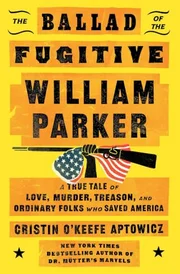

Poet Aptowicz turns to the history of her native Pennsylvania with the story of William Parker, enslaved in neighboring Maryland. After having been forced to fight other enslaved men in bare-knuckle contests, a teenage William came to blows with his own enslaver. He fled, making his way to a little Quaker community across the state line, where “whenever strange white men showed up waving ‘runaway slave’ notices, the town’s Black residents had a remarkable talent for vanishing—and not a soul in Christiana would tell you a thing about it.” Years passed after Parker’s arrival in 1839, but a vigilante posse tracked him down. “When kidnappers beaten by Parker and his men arrived bloodied and broken-limbed at a local tavern,” writes Aptowicz, “white doctors…refused them treatment once they learned why the men were injured.” A natural leader, Parker had formed a self-defense organization. Well-armed, they were prepared when his former enslaver arrived in September 1851 with a gang of “paddy rollers,” accompanied by a federal marshal. In the ensuing gunfight, known as the “Christiana Riot,” the enslaver was killed, touching off a long inquest that ended with true justice being served. William, meanwhile, escaped a second time, making his way to Canada via the Underground Railroad. Aptowicz places these events against a backdrop that includes a portrait of Philadelphia as a center of the abolitionist movement and, more, of a thriving Black community of free, often prosperous citizens. She also places William’s story against the fraught tensions between free and slaveholding states, with the Fugitive Slave Act of 1850 giving kidnappers and bounty hunters free rein to travel throughout the country in search of runaways. It makes for a swift-flowing narrative, with appearances by Frederick Douglass and John Wilkes Booth, thoroughly documented but accessibly written.