
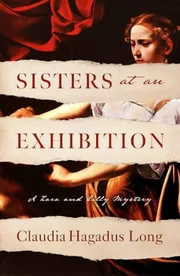

Zara Persil-Pendleton is a private investigator in Alameda, California, who mostly takes employment-related cases with a sideline involving the museum world, particularly regarding Judaica-related works and their provenance. As the daughter of a Holocaust survivor who hid her Jewishness after the war, Zara finds this heritage connection becoming important to her later in life. That enthusiasm is only partly shared by her wine aunt sister and investigative partner, Lilly. After a Bay Area museum spends heavily on a drawing by Caravaggio—a study related to his work Judith and Holofernes—a news report calls the drawing spurious, so the museum administrators put Zara on the case. Later, an art authenticator, suspected of lying about the drawing’s authenticity, disappears (as does the drawing itself), and a museum donor appears to be in on the fraud. Soon Zara and Lilly are, to their mingled pleasure and indignation, tracking an art thief to New York City and then to eastern France, where the current case may overlap with one involving Lilly’s boyfriend’s family’s murder during the Holocaust. The plot in Long’s series installment has just the right energy; it’s brisk without being frantic, and the third act’s Alsatian setting adds a fun pop of novelty. In the borderline-fussy Zara and the bon vivant Lilly, Long presents a classic and exquisitely funny sister act—one is even blond and the other brunette. Long also writes about food with the vim of a lifelong menu studier. The novel’s only significant weakness is its connection to its companion volumes: Zara, as narrator, has to do a lot of memory-jogging about events from the other mysteries, walking readers through what admittedly sound like rip-snorting tales—just so they’ll remember who’s looking for what and which characters have which traumas in their pasts. Despite touches of heaviness, the book remains escapist yet intelligent, and it merits a read by any devoted mystery fan.