
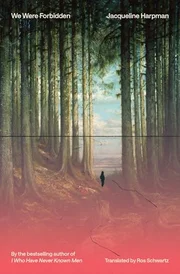

In I Who Have Never Known Men, which was republished in a revised translation in 2022, Harpman’s eerie prescience was on full display in a tale about 39 women and a girl held for decades in a bunker for reasons never made clear to them. The book, which was first published in 1995 in the Belgian writer’s native French, became a sleeper hit of sorts, in part because of Harpman’s interest in fascist or otherwise authoritarian control, freethinking, and the status of women in society, among other topics that have once again become painfully relevant. Harpman returns to these topics in the new collection. In “The Ardennes Forest,” a squad of men and women soldiers patrol a mysterious wooded area in the service of a war that may or may not have ended but that they are forbidden from fleeing. In “The Outcast,” a woman remembers her early, school-aged acts of defiance when—like Harpman herself—as a young girl in WWII-era Casablanca, she refused to parrot France’s (wavering) party line in her schoolwork. And in “The Broom Closet,” a woman boards a train, where she then imagines alternative lives for the character she becomes in her own mind, bringing the act of fiction-making itself into the spotlight. As a whole, the volume speaks to Harpman’s exquisitely subtle prose style, psychological acuity, and almost terrifying foresight—but it also hints at her sense of humor, which has previously been overshadowed, perhaps, by other qualities. Renewed interest in Harpman’s oeuvre isn’t just warranted: In works like this, she reveals herself to be one of the major writers of the 20th century, comparable to Gogol and Kafka but with a style and outlook entirely her own.
